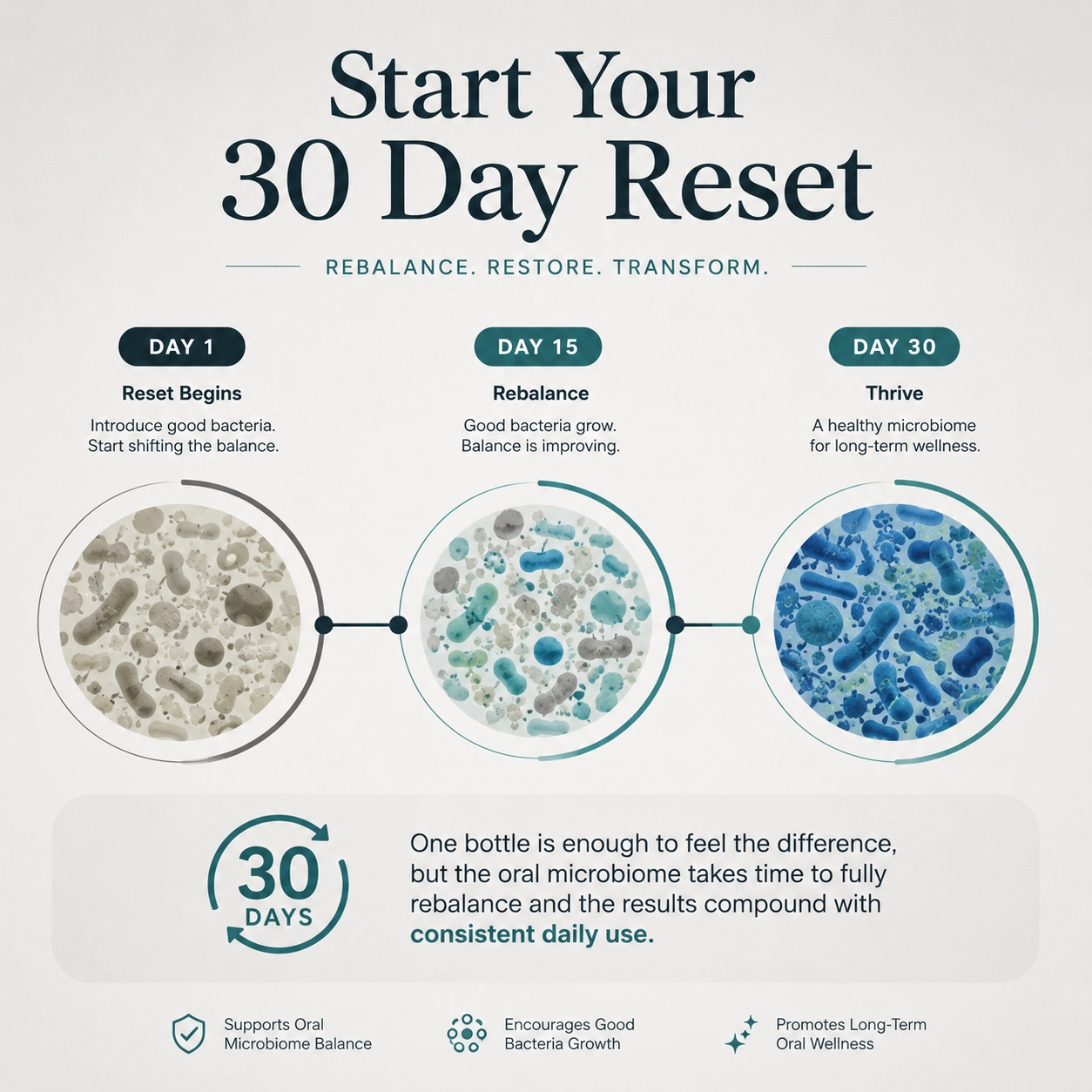
Bad Breath: Five Root Causes, Five Different Solutions. Which One Applies To You?
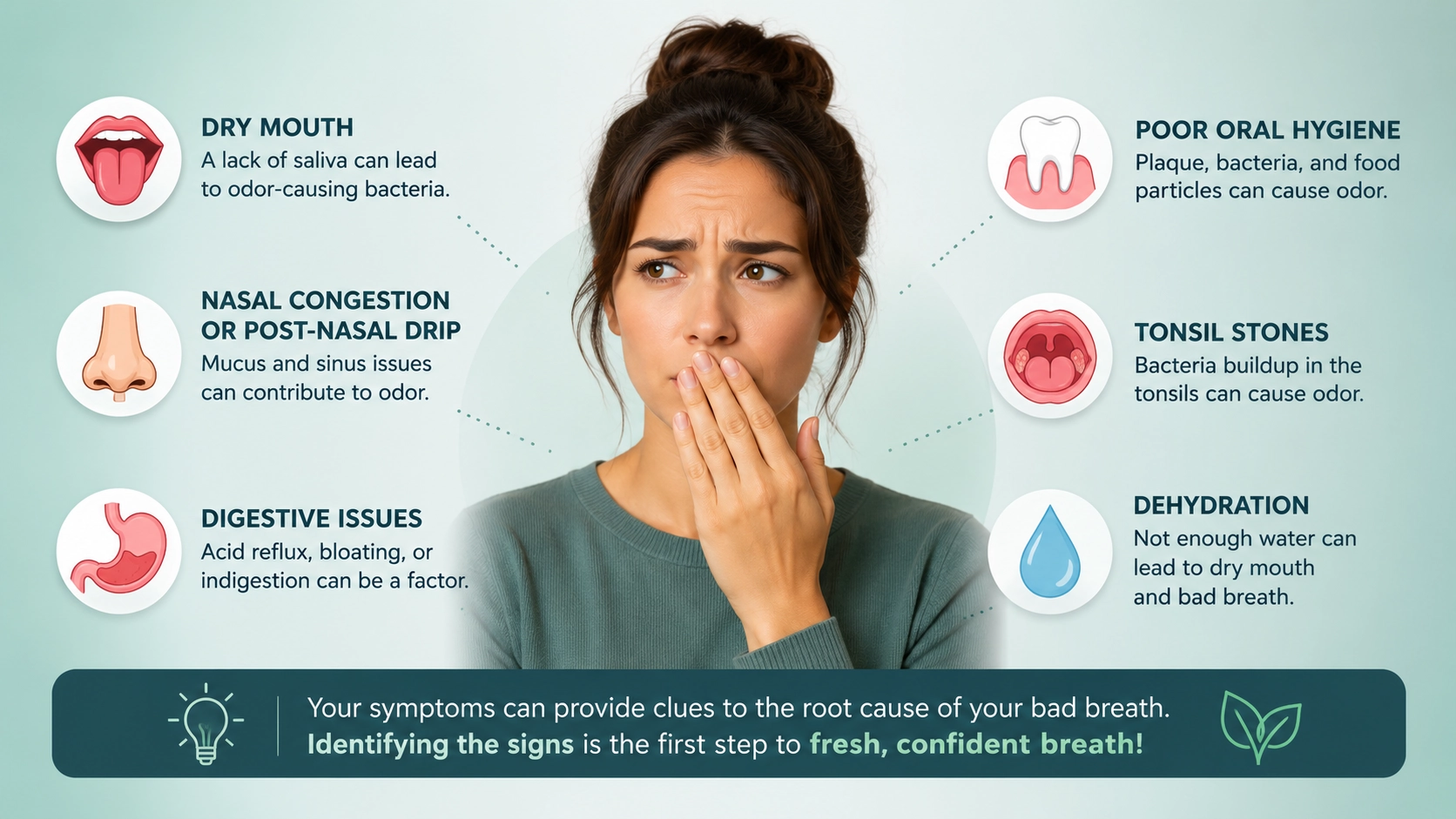
How to Identify Your Cause: Start by examining your symptoms.
Identifying the biological marker is the first step toward a permanent clinical solution.
HOW TO USE THIS GUIDE
Read through all five causes. One or more will match your experience. The solution section for each cause is specific — what works for one type may be irrelevant or even counterproductive for another.
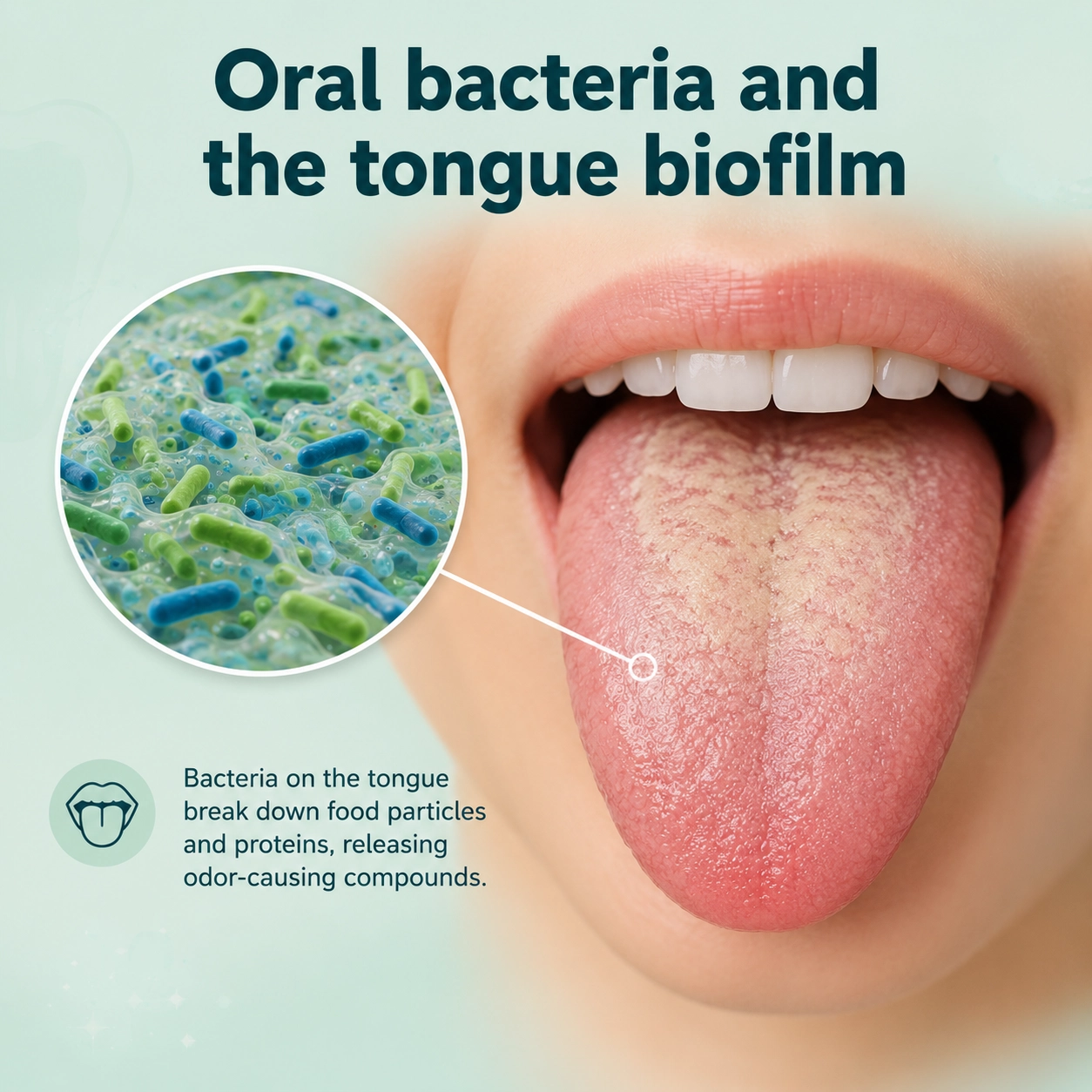
1. Oral Bacteria and The Tongue Biofilm
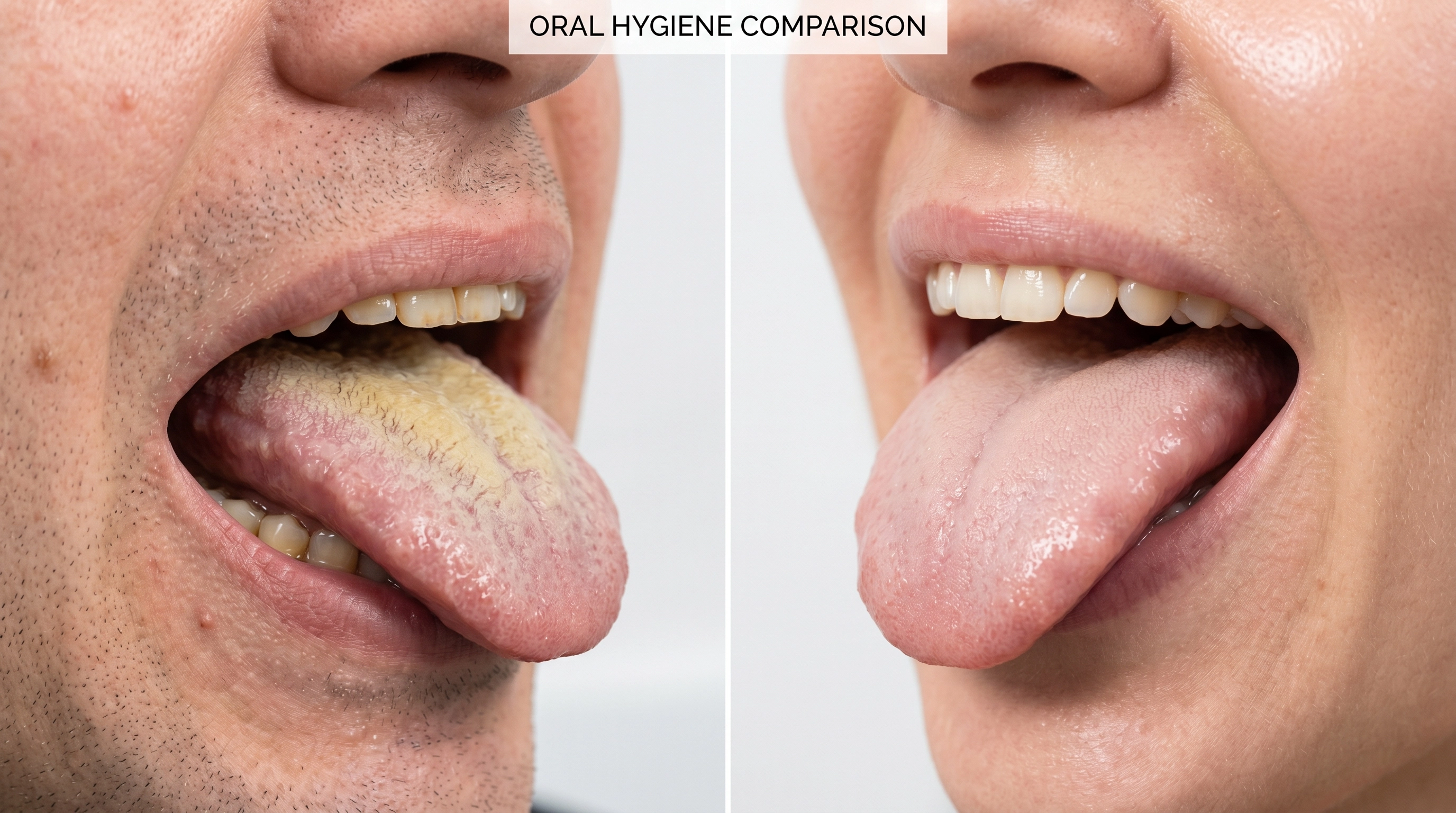
The most common cause by far. Anaerobic bacteria live inside the biofilm coating your tongue and produce volatile sulfur compounds — the gases responsible for bad breath. Brushing cleans your teeth not this biofilm. Mouthwash kills bacteria temporarily but disrupts the good ones too, making the imbalance worse. Tongue scraping only removes the surface layer.
What actually works: dissolve the biofilm first with an enzymatic serum, then brush and scrape to remove the loosened bacteria, then repopulate with an oral probiotic lozenge that deposits beneficial bacteria directly in your mouth. A 2020 clinical study in the Journal of Periodontology showed the probiotic strain LS-G60 reduced volatile sulfur compounds by up to 81ppb in 14 days. The order matters — wait 10 to 15 minutes after cleaning before dissolving your lozenge.
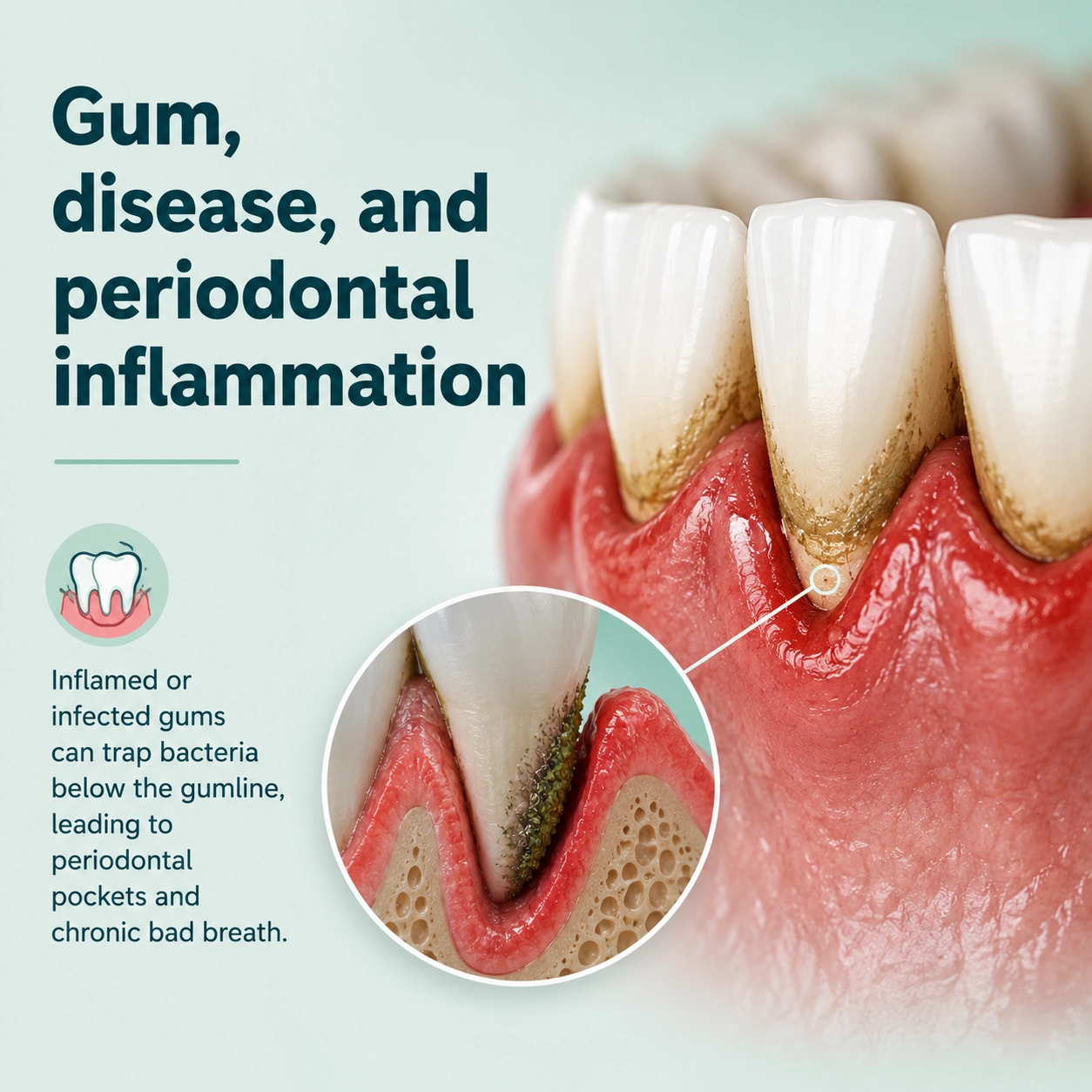
2. Gum Disease and Periodontal Inflammation
Inflamed gums create pockets where bacteria thrive beyond the reach of any home care. Signs — bleeding gums, sensitivity around specific teeth, a diagnosis of gingivitis or periodontitis.
What actually works: professional scaling and root planing to access sub-gingival bacteria. No home care protocol substitutes for professional treatment here. Oral probiotics with anti-inflammatory properties support gum tissue between dental visits.
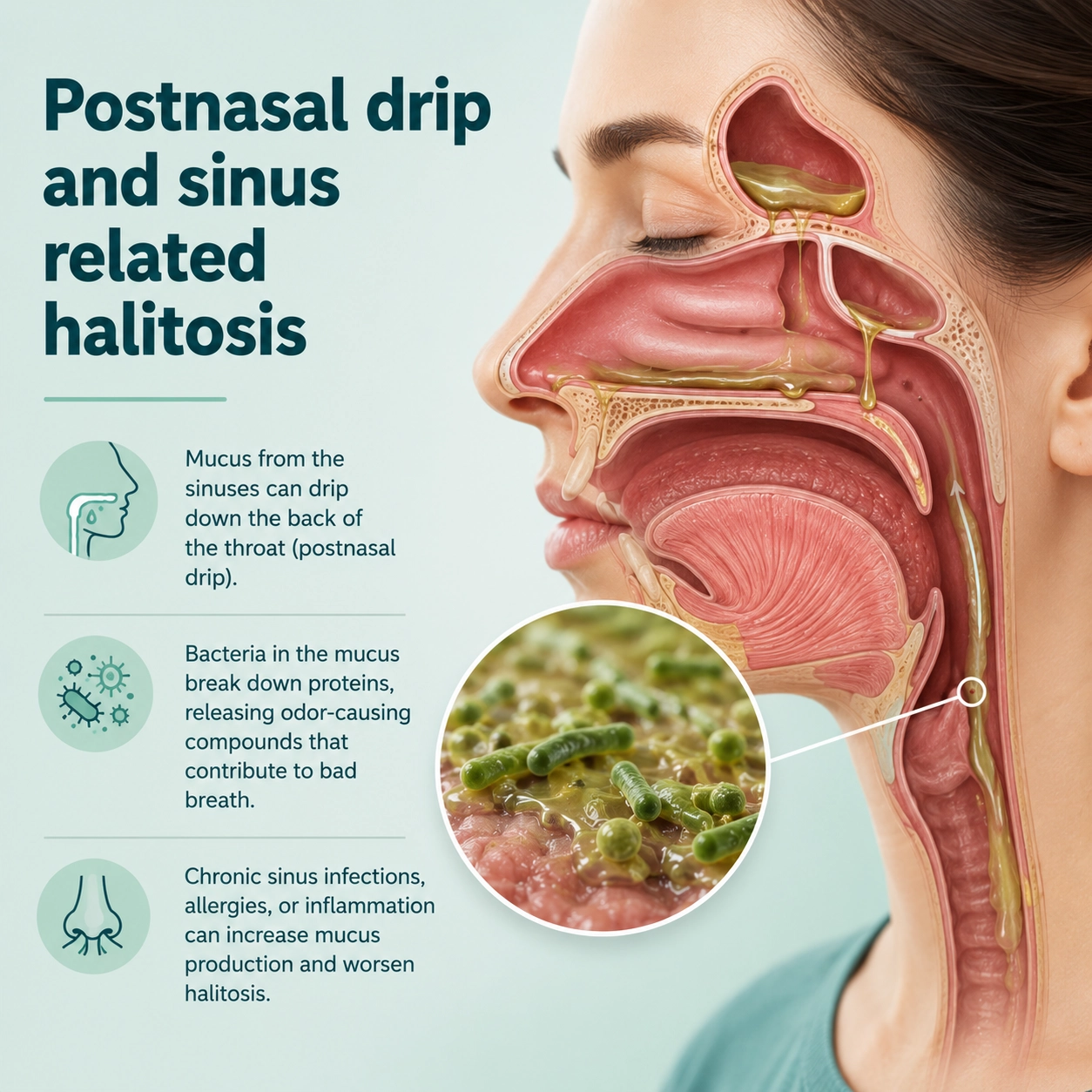
3. Postnasal Drip and Sinus Related Halitosis
Mucus draining down the back of the throat continuously feeds odour producing bacteria. The source is above the mouth so oral hygiene does nothing for this type.
What actually works: see a physician or ENT to diagnose and treat the underlying sinusitis or allergic rhinitis. Treatment may include steroid nasal sprays or antihistamines. Alongside medical treatment — saline nasal irrigation morning and night using a neti pot or squeeze bottle. Saline spray during the day. Stay well hydrated. Using an oral probiotic will help create a healthier oral environment, which will allow for better breath as the mucus issues are addressed.
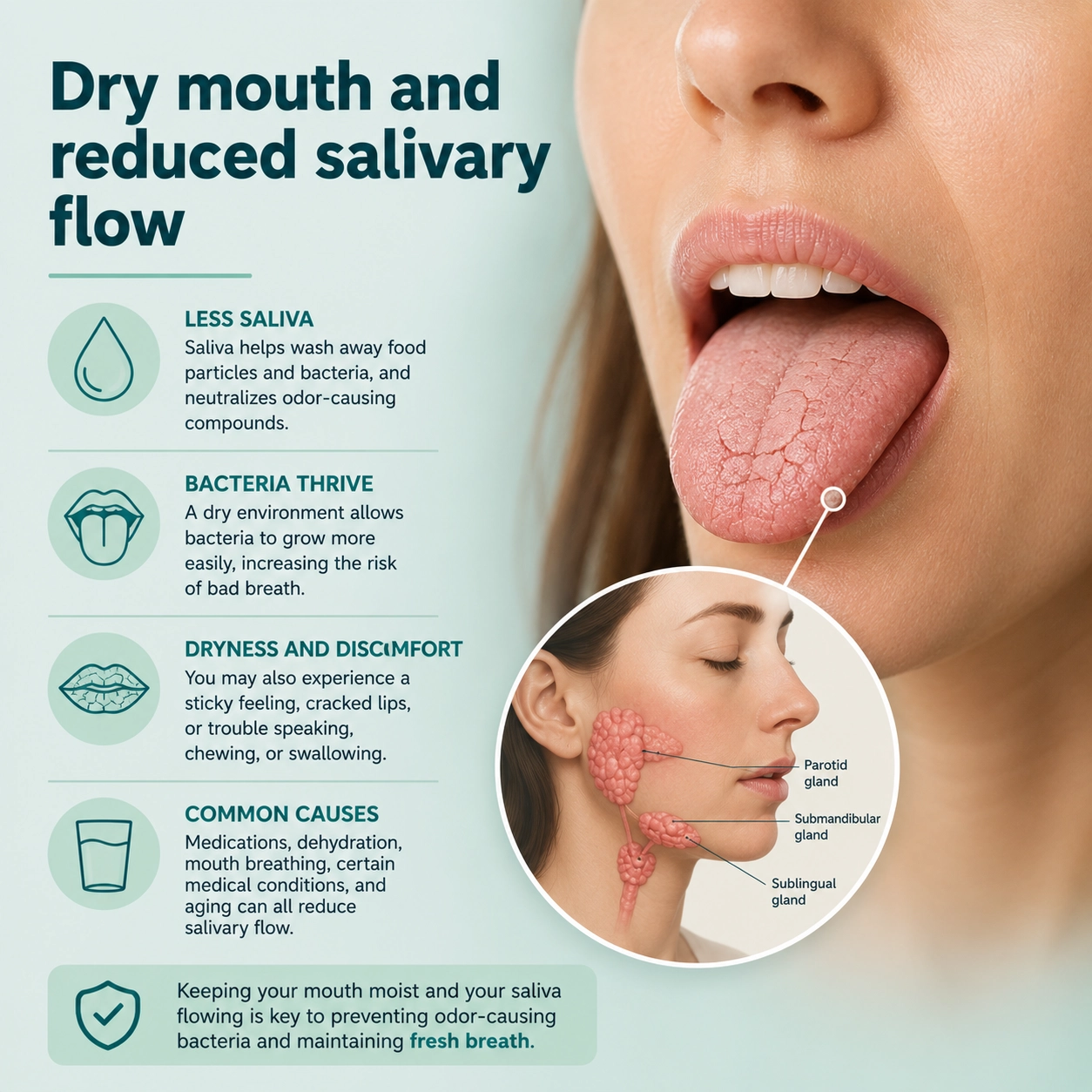
4. Dry Mouth and Reduced Salivary Flow
Saliva is your mouth’s natural defence — it washes away bacteria and neutralises acids. When flow drops, bacteria multiply fast. Common causes — mouth breathing during sleep, certain medications, dehydration.
What actually works: stay consistently hydrated. Sugar free xylitol gum stimulates saliva production. Nasal breathing during sleep where possible. A humidifier overnight. Oral probiotics help maintain bacterial balance even in low saliva conditions.
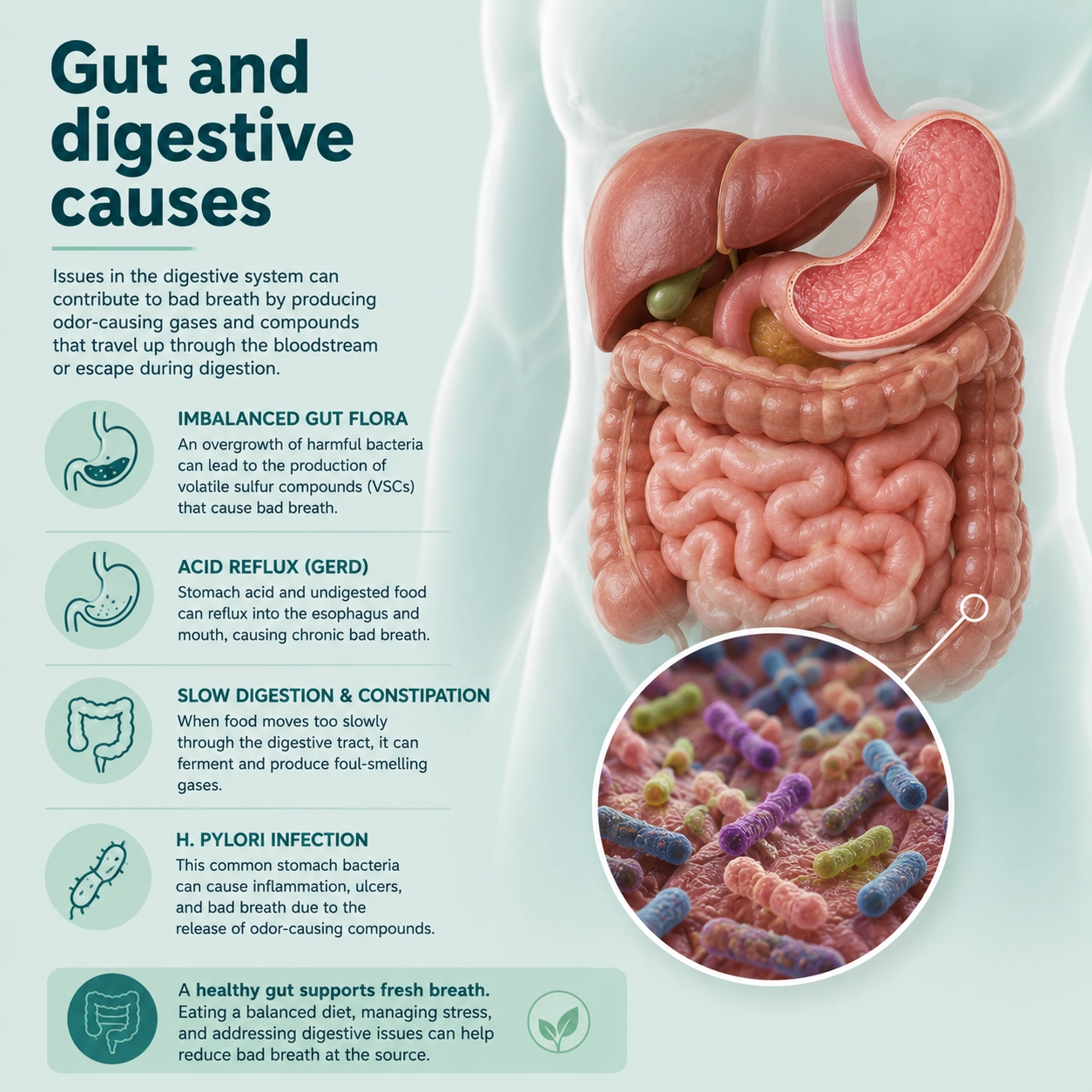
5. Gut and Digestive Causes including H. pylori
Only 5 to 10 percent of chronic bad breath cases are gut related. But if your breath is completely unresponsive to any oral hygiene and you have digestive symptoms, this may be your cause. H. pylori infection in the stomach produces sulfur compounds that travel through the bloodstream and exit through the mouth on every exhale. No oral hygiene protocol reaches this.
What actually works: see a physician for H. pylori testing. Antibiotic eradication therapy has been shown to measurably reduce breath odour in confirmed cases. Oral probiotics with strains researched for H. pylori activity support a healthier oral and digestive environment alongside medical treatment.
PUTTING IT ALL TOGETHER
Persistent bad breath almost always has more than one contributing cause. The oral bacteria type is the most common starting point for most people. Gum disease, postnasal drip, dry mouth, and gut issues layer on top for many. Addressing only one cause while the others remain unresolved is why most people never fully fix the problem despite years of trying.
The good news is that once you identify which causes apply to you and address each one specifically the results are dramatic and lasting.